
Protect Your Income. Prepare For Life’s What-Ifs.
The right insurance strategy should match your goals, your risks, and your stage of life. Cannon Wealth Solutions helps clients review protection needs, identify risk exposure, and plan for events such as disability, death, long-term care needs, and future income security.
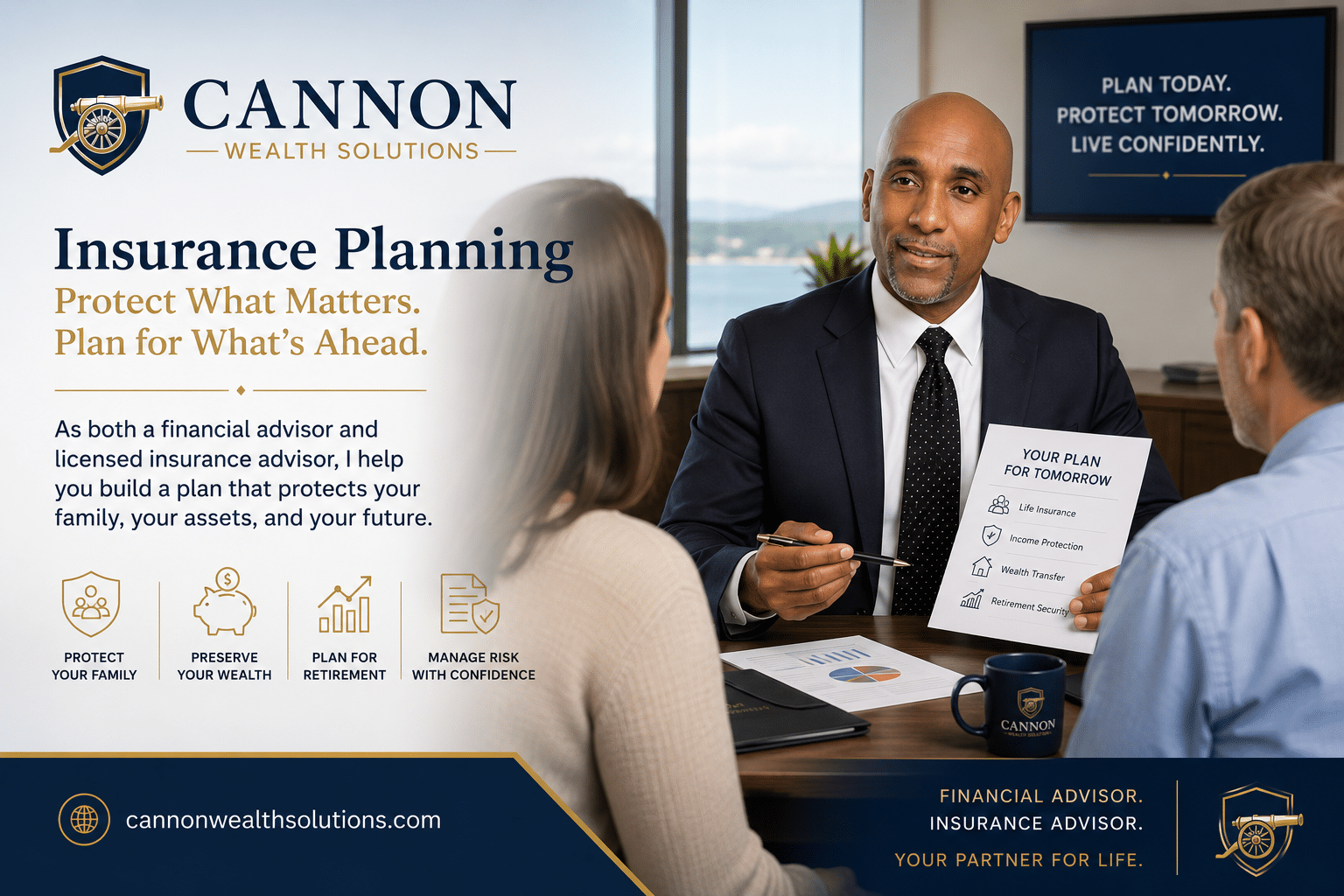
Protect Today. Plan For Tomorrow.
Insurance planning is about understanding what you have, what you may need, and how each piece fits into your larger retirement and financial plan.
What kind of insurance do you have? What kind of insurance do you want? What kind of insurance do you need? The answer can vary from person to person and place to place. Insurance planning may include maintaining family income in the event of disability or death, identifying current and future risk exposure, evaluating the most cost-effective way to insure yourself, planning for the possibility of long-term care, and preparing an ongoing review of risk within your overall plan.
People are living longer, fuller lives, but this can be a double-edged sword. A longer life means more years need to be accounted for, which often means more money needs to be set aside. A disability or death in the family can have a severe impact on those left behind. A life insurance policy can help protect you, your spouse, your children, or even your parents if the unexpected occurs.
Life insurance is not the only form of insurance that may be useful to you and your family. Two other important areas many people overlook are long-term care and disability insurance. Disability income insurance can help protect your family if you are the primary earner and become unable to work. It is not always enough to assume your employer has this covered, since many employer plans cover only a portion of income and may not include bonuses or commissions.
Long-term care is another major consideration. Care facilities and home health support can be expensive, but this obstacle can often be reduced through careful planning. Traditional policies may help cover nursing home or home health care costs, while hybrid policies may combine a defined death benefit with extended or long-term care coverage. The right approach begins with reviewing the options and choosing a plan that fits your needs.